Should You Rebuild Your Channel for an International Audience?
Two channels, similar view counts, and revenue that is not remotely similar. Same platform, same recommendation system, wildly different outcomes.
That observation is what pushes most creators to ask whether they should rebuild for an English-speaking audience instead of the one they already have. It is a good question and it deserves a better answer than the one usually given, which is some version of yes, obviously, the money is better over there.
I have made that move myself and helped a number of other people make it. Some of them should have. A few of them should not have. This is how I would think it through if I were deciding today.
Why revenue varies so much between two similar channels
The figure that summarises this is RPM – revenue per mille, the average a creator keeps per thousand monetised views. It is not a rate you set. It is a report on what happened.
What it reports on is quite a long list: where the audience lives, what the video is about, the advertising season, the length of the video, how much of it people watched, how many of those views were monetisable at all. Change any of those and the number moves.
Which is the first reason to be sceptical of any specific figure you see quoted online. There is no fixed rate for a country, a niche or a channel, and the person quoting one is describing their situation, not yours.
Why some markets are treated as higher-value
The reasoning behind targeting English-speaking markets is not mysterious. Those markets tend to have a more developed advertising ecosystem: more businesses competing for the same attention, larger budgets in certain sectors, and a wider spread of subjects where advertisers bid seriously.
That is real, and it is why the direction is popular. But notice what it actually gives you. It gives you a wider field to play on. It does not give you a result. The size of the market decides your ceiling, not your outcome.
The misunderstanding that costs people a year
Here is the belief I would most like to dismantle: that publishing in English is itself the lever.
It is not. If viewers do not watch to the end, do not engage, and do not come back, the fact that they live in a high-value advertising market changes very little. A weak video with an international audience is still a weak video. You have simply moved it somewhere more competitive.
This is the part people skip, and it is why so many channels make the switch, see nothing improve, and conclude that the whole idea was overhyped. The idea was fine. The execution assumed the language was the work.
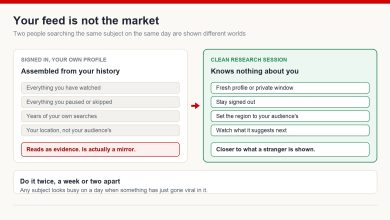
Working for an audience in another language is not a translation project. It is a research project about people whose habits you do not yet know.
What the switch actually costs you
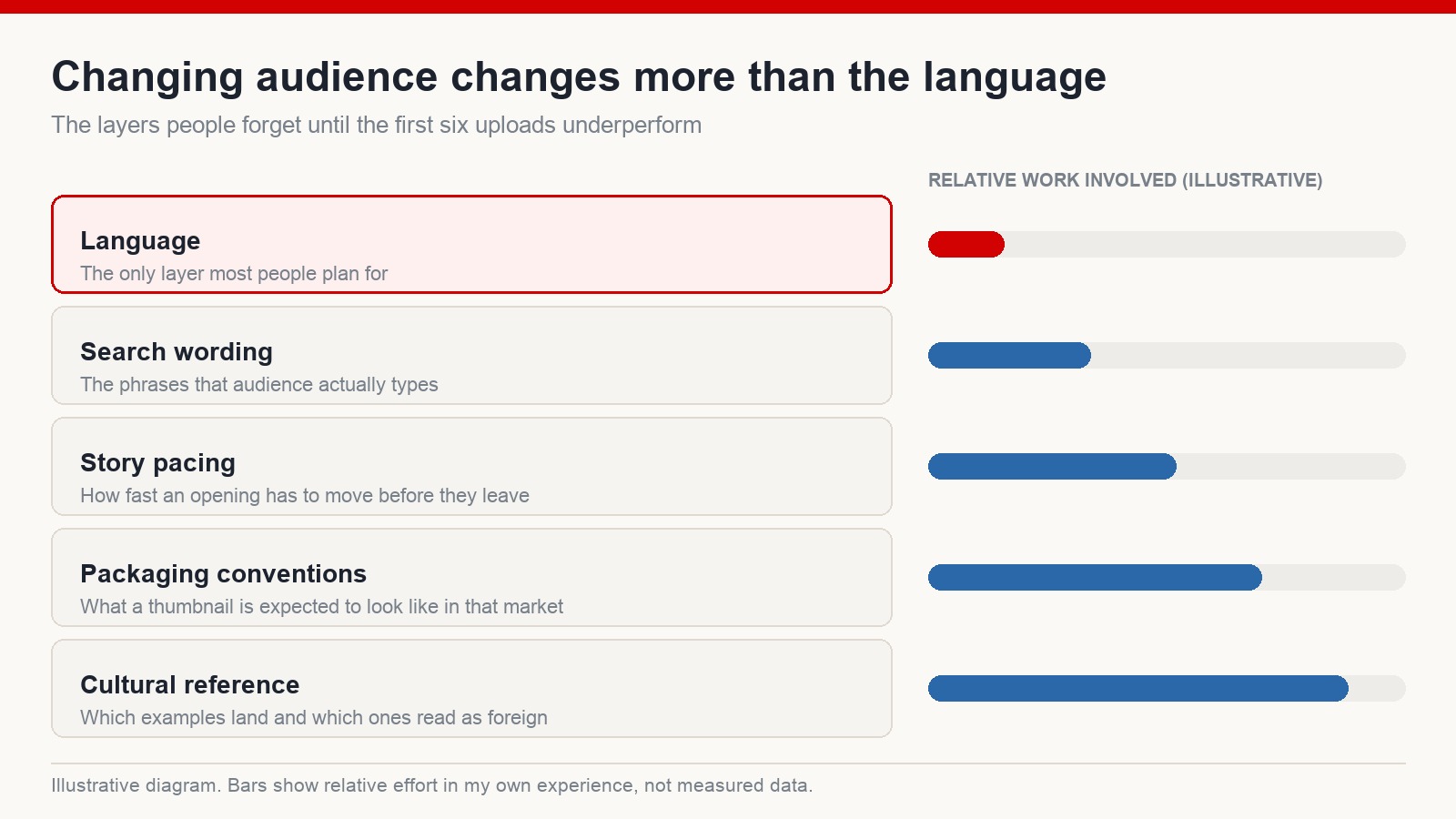
Language is the layer everybody plans for, and it is the smallest one. Underneath it sit the phrases that audience actually types into a search box, the pace an opening has to move at before they leave, the visual conventions a thumbnail is expected to follow in that market, and which examples land rather than reading as foreign.
I am showing this as a cost, not as a checklist, because the point at this stage is budgeting. If you are deciding whether to make the move, the honest question is whether you have the weeks of research and the tolerance for early failure that those layers require. Plenty of capable people do not, and that is a legitimate answer.
Choosing a subject by its earning reputation is a bad first filter
You will find lists of high-value subjects everywhere – personal finance, education, technology, science, psychology, productivity, business. There is a reason those keep appearing: they tend to hold long-term interest, they have steady search demand, and they lend themselves to a library of content that stays relevant.
What they are not is a shortcut. Picking a subject because of its reputation, with no interest in it and nothing to say about it, produces exactly the kind of thin content that struggles anywhere. The competition in those categories is also fierce, precisely because everyone read the same list.
A subject is worth choosing at the intersection of three things: what an audience genuinely wants, what you can actually make well and repeatedly, and whether it can sustain hundreds of videos. Earning reputation is one input into that, not the whole decision.
Three questions worth answering honestly
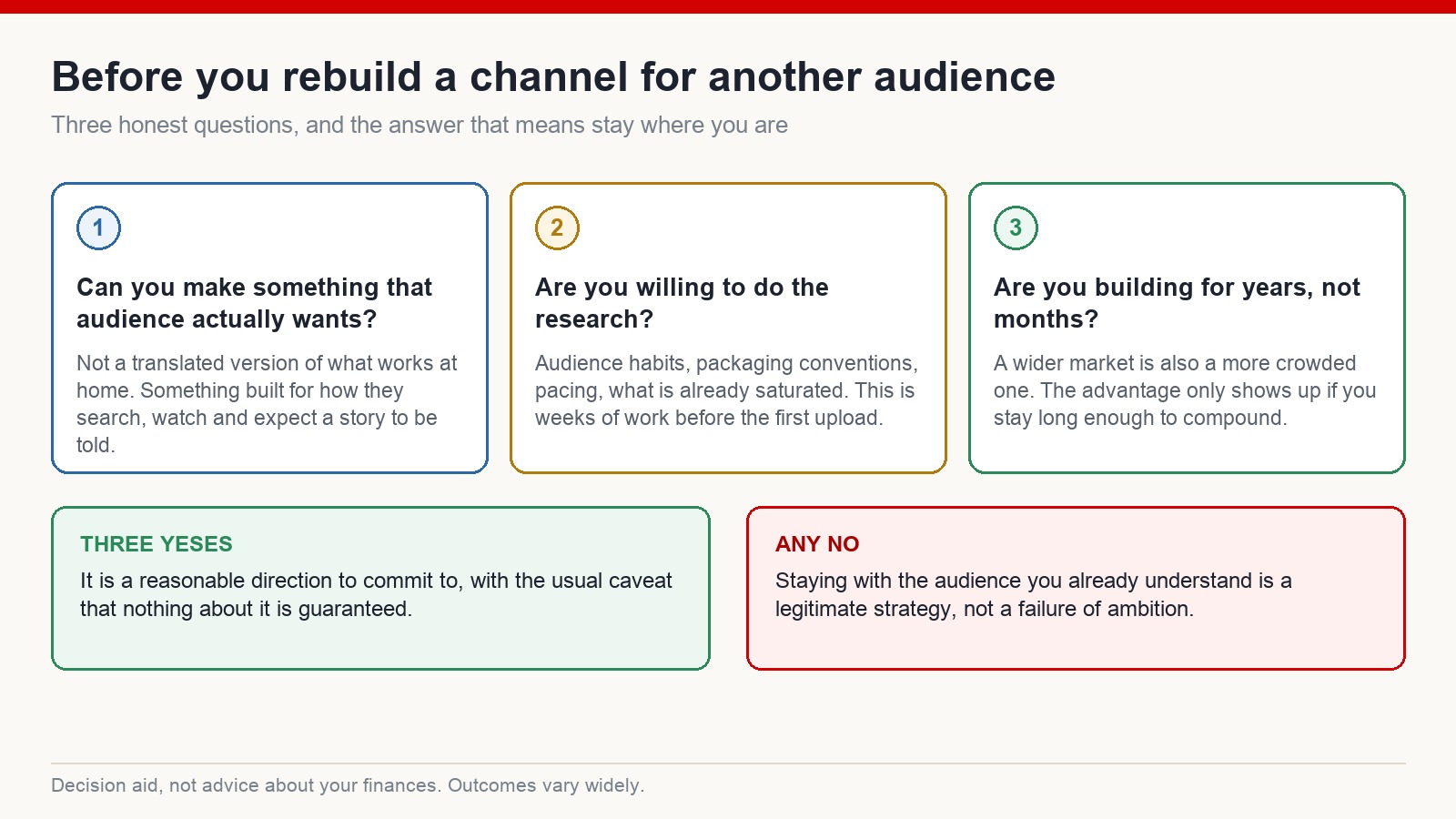
Can you make something that audience actually wants? Not a translated version of what works at home. Something built for how they search, watch, and expect a story to be told.
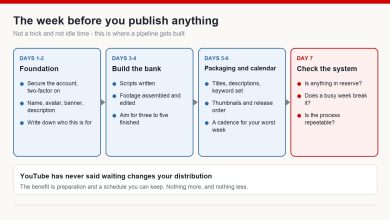
Are you willing to do the research? Audience habits, packaging conventions, pacing, what is already saturated. That is weeks of work before you publish anything.
Are you building for years rather than months? A wider market is also a more crowded one. The advantage only shows up if you stay long enough for it to compound.
Three yeses and this is a reasonable direction to commit to – with the standing caveat that nothing about it is guaranteed and the outcome varies enormously between channels.
When staying where you are is the better call
If you understand your existing audience deeply, if you have a real advantage in content that only works in your own market, and if the thing you make genuinely serves people there, then staying is a strategy rather than a lack of ambition.
I would rather see somebody build something excellent for an audience they understand than something mediocre for one they do not. Depth of understanding is an asset that takes years to build, and abandoning it to chase a reputation for higher advertising rates is often a bad trade.
What I will not do is tell you which of those applies to you, or make any claim about what either path will pay. That is not a decision anyone should outsource to an article, and I am not in a position to advise anyone about their income.
Content quality is the ceiling on all of it
Everything above is a question of positioning, and positioning has limits.
The creators I watch do well share a boring habit: they invest more in research and scripting than in publishing volume. An opening that earns the next thirty seconds, a clear structure, something genuinely useful in the middle, visuals that do not undermine the point, and a pace that keeps moving. That is what keeps people watching, and retention is what everything else is built on.
No market choice compensates for content nobody finishes.
Frequently asked questions
Are English-speaking markets always more valuable?
Not uniformly. Many creators observe higher potential in some of those markets across a number of categories, but it varies by subject, by season and by channel. Treat any single figure you are shown as one channel’s experience.
Does publishing in English guarantee more revenue?
No. Content quality, competition, retention and fit with the target audience all matter, and any of them can undo the market advantage entirely.
Should a beginner start with an international audience?
It is a reasonable option if you can make content that suits those viewers and you are willing to research properly. Be aware that the competition is also higher, and the early silence tends to last longer.
Should I pick a niche purely for its earning reputation?
No. Choose at the intersection of audience demand, your own capability and long-term potential. Earning reputation is one factor among several, and it is the least controllable one.
Do I need to speak the language fluently?
Fluency helps but is not the gate people assume. The harder requirement is understanding the audience – what they search for, what they expect, what bores them. That is research, not vocabulary.
Start with the audience, not the number
If you decide to build for an international audience, do not start by asking what the rates are. Start by working out who you are making this for, what they are already looking for, and what you could make that they would genuinely choose over the alternatives.
Revenue is downstream of that. It is the result of a working system, not the setting you configure at the beginning – and how much of it arrives varies so widely between channels that any number I gave you would mislead more than it helped.
That research process – market first, subject second, video third – is what I teach at mmoyoutube.com.